3D Laser Scanning Process An
article that is to be laser examined is set on the bed of the digitizer.
Specific programming drives the laser test over the surface of the article. The
laser test undertakings a line of laser light onto the surface while 2 sensor
cameras persistently record the changing separation and state of the laser line
in three measurements (XYZ) as it scopes along the item.
The state of the item shows up as
a great many focuses called a "point cloud" on the PC screen as the
laser moves around catching the whole surface state of the article. The
procedure is quick, getting together to 750,000 focuses every second and exceptionally
exact (to ±.0005″).
After the enormous point cloud
information records are made, they are enrolled and converged into one
three-dimensional representation of the item and post-handled with different
programming bundles suitable for a particular application.
On the off chance that the
information is to be utilized for review, the examined article can be
contrasted with the architect's CAD ostensible information. The aftereffect of
this examination procedure is conveyed as a "shading guide deviation
report," in PDF position, which pictorially portrays the contrasts between
the output information and the CAD information.
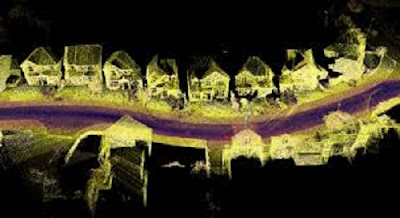
Laser scanning
is the quickest, most exact, and computerized approach to get 3D advanced
information for figuring out. Once more, utilizing specific programming, the
point cloud information is utilized to make a 3D CAD model of the part's
geometry. The CAD model empowers the exact generation of the filtered item, or
the article can be changed in the CAD model to right flaws. Laser Design can
give a surface model or the more perplexing strong model, whichever results are
required for the application.
